People bring care.
Local hosts, cooks and volunteers welcome guests, prepare food and take responsibility for the kitchen.
Satoshi Langar / The community kitchen idea
Langar is a free community kitchen rooted in the Sikh tradition of equality and seva. Our idea is simple: bring people together to share food with dignity, while open tools and AI help with the organizing work.
A tradition of welcome
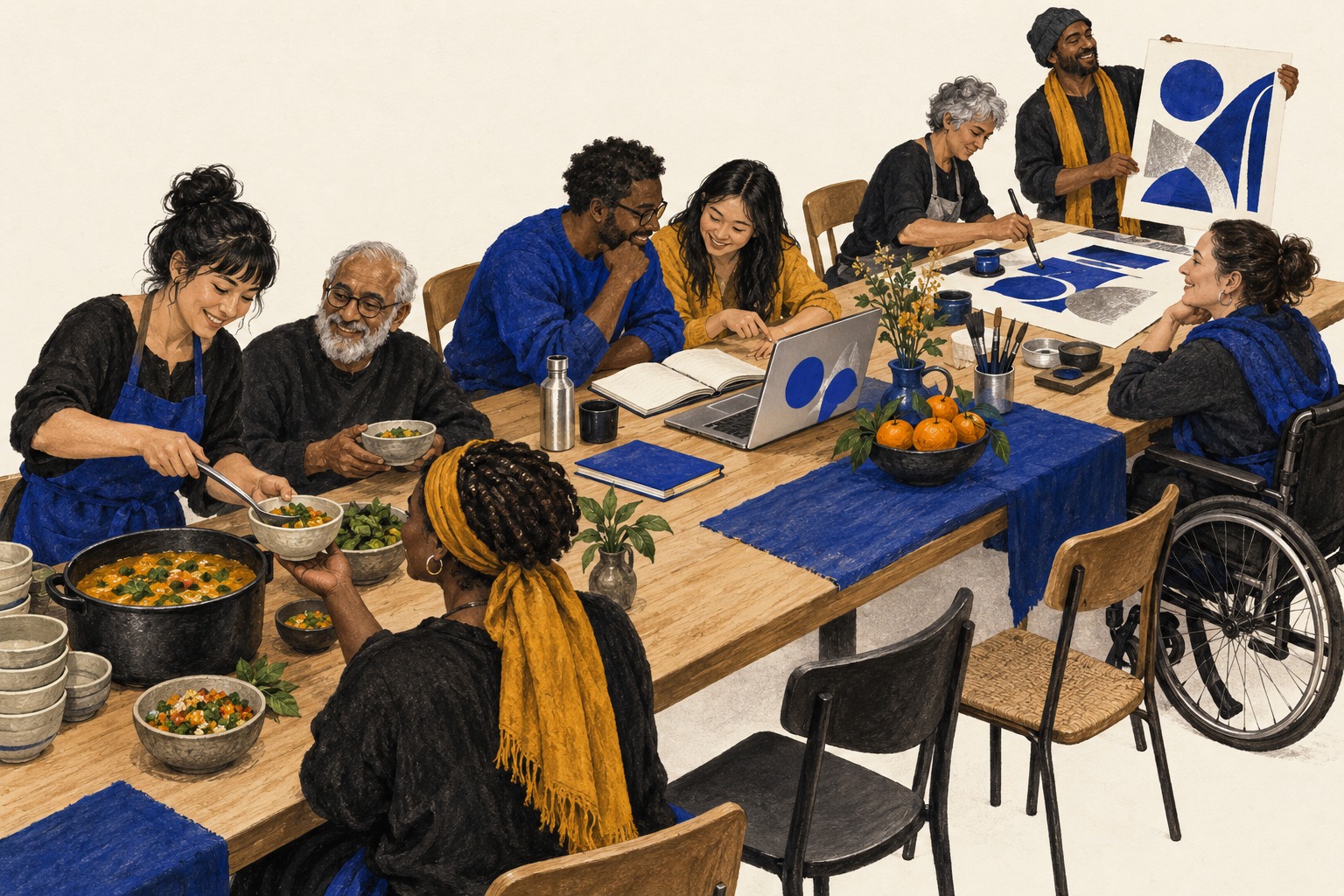
Langar brings communal cooking, serving, eating and sharing together. A sevadar is someone who serves. Satoshi Langar is our proposed community effort inspired by that tradition, open to people of every background.
A guest would never need a wallet, a donation, a religious belief, a photograph or proof of need to eat. People provide the hospitality; technology helps with the plan.
Read the Sikh Coalition’s explanation of langar ↗ · Learn about seva ↗
Local hosts, cooks and volunteers welcome guests, prepare food and take responsibility for the kitchen.
Agents can draft shopping lists, translate instructions and organize records for a human to check.
Human stewards agree the plan, review evidence and explain how resources were used, while protecting guests’ privacy.
Start with a local need and a willing host.
Agree food, access, people and resources.
People cook, welcome, share and clean.
Review the record and improve the next plan.
A proposed operating model. Local human approval and safety review come before an event.
A named human host works with an existing kitchen or community venue. Agree on need, accessibility, food safety, dietary requirements and a realistic budget.
People approve the menu, buy ingredients and schedule volunteers. Agents can draft shopping lists, translate instructions and check the plan for missing information.
Sevadars cook, serve and clean. Guests are welcome without payment, a wallet, a religious test, a photograph or proof of need. Physical safety remains a human responsibility.
Two designated human stewards check the event record, receipts and aggregate meal count. An agent can flag duplicates or discrepancies, but cannot approve its own evidence.
Publish a redacted summary: what happened, approximate or verified counts, the budget, corrections and the next improvement. Preserve a private route for concerns.
Our proposed Proof of Seva record connects an agreed task to evidence and human review. It is an operational record, not a blockchain consensus mechanism or a claim that software can prove a meal was served.
A task ID, consented contributor name or pseudonym, completion time, a brief outcome and two reviewer decisions. Keep guest identities and sensitive records out of the public record.
A named human operator, a limited task, sources, output version, review result and actual cost if applicable. A reviewed translation is useful work; it is not a meal count.
Disputed evidence pauses a grant decision. A different human reviewer hears the appeal. Corrections stay visible; rejected claims do not become permanent public accusations.
Seva is voluntary and never requires payment. Alongside it, a future funded pilot may offer agreed expense reimbursement or fixed sats grants for specific work. The task, amount, budget and eligibility must be clear before work begins.
No reward program or kitchen event is active yet. Agents cannot promise grants, approve payouts or control wallets. A grant never buys priority access to a meal.
You do not need to organize a whole kitchen. Begin with one local question, an access checklist or a small task you can help someone review.
Explore a local need, review accessibility, draft volunteer tasks or check a service record. If you have no local host yet, keep the work as research.
Use the kitchen template. Record what is known, what needs a human decision, and one useful result. Leave private locations and participant details out.
Name the permissions still missing and a way to stop. You can save the brief privately or prepare a redacted public proposal for discussion.
Download an editable Markdown text file. Complete it on your own device; nothing is submitted by downloading.
You have a clear need to explore, one bounded task, a list of unanswered questions and the next human decision. No event needs to be announced to complete this step.
Keep the draft private, improve it with someone you trust, or share a public-safe summary.
This opens a draft GitHub issue. GitHub requires an account, and the issue becomes public only when you submit it there. Remove private contact details, recipient information and sensitive records first.
Open a GitHub draft ↗After submitting, keep the issue link and follow the discussion. A proposal is not an accepted role, event booking or funding commitment. Agree the scope with a human before representing the project.
A local organizer would need to agree the task and approve safety, resources and consent before a pilot. Until then, improve the plan or help review another public checklist. A public proposal does not book a shift or establish a reward.